The Job Role
A person with a Kubernetes certification would typically have responsibilities that include:
- Cluster Management: Configuring and maintaining Kubernetes clusters, ensuring they are running smoothly and efficiently.
- Deployment Automation: Automating the deployment of containerized applications using Kubernetes, which involves writing deployment scripts and managing release cycles.
- Scaling: Ensuring applications can be scaled up or down based on demand, and managing the load balancing and auto-scaling features within Kubernetes.
- Monitoring and Troubleshooting: Implementing monitoring solutions to track the performance of applications and infrastructure, and troubleshooting any issues that arise.
- Networking: Configuring and maintaining network policies within Kubernetes to ensure secure and efficient communication between the containers.
- Security: Enforcing security best practices within the Kubernetes environment, including managing access controls and security policies.
- Storage Management: Setting up and managing persistent storage solutions for stateful applications in Kubernetes.
- Continuous Integration/Continuous Deployment (CI/CD): Integrating Kubernetes into CI/CD pipelines to streamline the development, testing, and deployment of applications.
- Logging and Reporting: Setting up logging systems to collect and analyze logs from containers and the Kubernetes cluster, aiding in diagnostics and performance metrics.
- Resource Optimization: Managing resources to optimize costs and performance, which includes allocating CPU, memory, and storage resources effectively.
- Disaster Recovery and High Availability: Implementing strategies for disaster recovery, such as backups and failovers, and ensuring high availability of the Kubernetes clusters.
- Documentation and Compliance: Documenting the architecture, processes, and compliance measures associated with the Kubernetes environment.
- Community Engagement and Training: Staying updated with the latest Kubernetes features and best practices, and potentially training other staff members or contributing to the Kubernetes community.
- Vendor Interaction: Working with cloud service providers and other technology vendors that offer Kubernetes as part of their services, for support and integration assistance.
Having a Kubernetes certification typically signifies that an individual has demonstrated proficiency in these areas and is competent to handle the responsibilities associated with managing a Kubernetes environment.
Your Learning Path
Start Here
Learning Path Description
The Kubernetes Certification Training Series is meticulously crafted to guide you through the Kubernetes landscape, ensuring a thorough understanding of containerization technology and its application within the cloud. This strategic educational pathway is structured to progressively build your expertise, preparing you for professional application development and administration roles in Kubernetes, as well as kubernetes training and certification success.
Our first course, “Kubernetes – Containerizing Applications in the Cloud,” serves as the perfect entry point, introducing the principles of containerization and the foundational use of Kubernetes. This course lays the groundwork for subsequent certifications, emphasizing practical skills for containerizing and managing applications—a vital step on the Kubernetes certification path.
The journey continues with the “Certified Kubernetes Application Developer (CKAD)” course. Aspiring developers will delve into the specifics of designing and deploying cloud-native applications on Kubernetes, a key skill endorsed by the CKAD certification. With a hands-on approach, the course prepares students with relevant CKAD exam questions and real-world scenarios, ensuring they are well-equipped to tackle the challenges of Kubernetes application development.
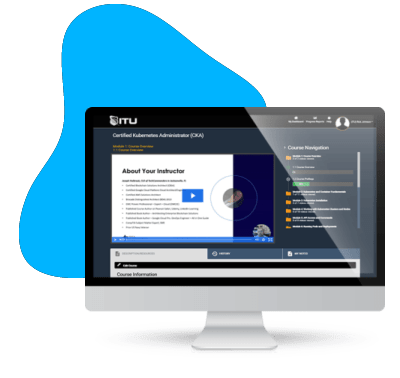
The series culminates with the “Certified Kubernetes Administrator (CKA)” course. It is tailored for those aiming to master the full spectrum of Kubernetes administration, including the azure kubernetes certification path for those using Azure services. The course covers essential topics such as cluster management and orchestration, preparing students through extensive labs and critical CKA exam questions, aligning with the competencies required for the CKA certification.
Throughout the series, key concepts are reinforced, and students are encouraged to engage with a variety of CKA and CKAD questions, ensuring a deep and practical understanding of Kubernetes. This training series is not just about passing exams—it’s about forging a path to becoming a skilled practitioner ready to harness the power of Kubernetes in any professional environment.
Who Is This Training For?
The Kubernetes Certification Training Series is tailored for a diverse range of professionals who are looking to enhance their skill set in the domain of cloud computing and container orchestration with Kubernetes.
- Software Developers: Professionals who want to specialize in creating applications that are designed to run on Kubernetes.
- System Administrators: Those responsible for the upkeep, configuration, and reliable operation of computer systems, particularly multi-user computers, such as servers.
- DevOps Engineers: Practitioners who are involved in the integration of development and operations disciplines to streamline the project lifecycle from design to deployment.
- IT Professionals: Anyone currently working in the IT field who wants to update their knowledge to include containerization and orchestration technologies.
- Cloud Professionals: Individuals who specialize in cloud computing and cloud infrastructure.
- Technical Project Managers: Managers overseeing technical projects who need to understand the environment in which their projects run to better manage their teams and workflow.
- Operations Staff: Team members who are involved in the day-to-day operations of managing software in production environments.
- Technical Leads: Senior engineers who guide teams in designing and implementing technical solutions.
- Application Architects: Architects who design the overarching structure of software applications, including a new generation of distributed systems.
- Quality Assurance Engineers: Professionals who need to understand the environment and workflows to develop better testing frameworks.
- Network Professionals: Those who manage and configure network infrastructure and are looking to expand into network operations within a Kubernetes environment.
- Security Professionals: Individuals responsible for securing applications and infrastructure, especially as it pertains to deployments in Kubernetes clusters.
- Fresh Graduates: Recent graduates in computer science or related fields who are seeking to add industry-relevant skills to their portfolio.
- Freelancers & Consultants: Independent professionals who provide expert advice in Kubernetes and need to stay current with the latest in container orchestration.
This comprehensive training series is designed to provide these professionals with the skills necessary to confidently use Kubernetes in a variety of job roles and to showcase their expertise through recognized certifications.
Frequestly Asked Questions
What is Kubernetes Certification?
Kubernetes Certification, such as the Certified Kubernetes Administrator (CKA) and Certified Kubernetes Application Developer (CKAD), validates an individual’s expertise in managing containerized applications and infrastructure using Kubernetes.
Who should consider taking the Kubernetes Certification?
IT professionals like system administrators, cloud professionals, DevOps engineers, software developers, and anyone interested in managing containerized applications should consider Kubernetes certification to validate their skills and knowledge.
How does one prepare for Kubernetes Certification exams?
Preparation typically involves hands-on experience with Kubernetes, studying the core concepts and practices, and completing a formal training program, such as the Kubernetes Certification Training Series, which includes practice exams and real-world scenarios.
What are the prerequisites for Kubernetes Certification?
While there are no strict prerequisites, it is recommended that candidates have a basic understanding of Docker, containerization, and cloud computing concepts, along with some experience in deploying applications and managing systems.
Why is Kubernetes Certification important for professionals?
Kubernetes is the leading container orchestration platform, and certification demonstrates a recognized level of proficiency that is valued by employers. It can lead to career advancement, better job opportunities, and the ability to manage modern, scalable applications effectively.






 CompTIA
Train for a globally recognized IT certification with our comprehensive CompTIA courses.
A+ | Network+ | Security+
CompTIA
Train for a globally recognized IT certification with our comprehensive CompTIA courses.
A+ | Network+ | Security+
 Cybersecurity
Master the art of combating cybersecurity threats and become a cyber hero.
Ethical Hacking (CEH) | CISSP | CISM
Cybersecurity
Master the art of combating cybersecurity threats and become a cyber hero.
Ethical Hacking (CEH) | CISSP | CISM
 Cloud Computing
An essential skill set in today's IT environments. Learn cloud computing platforms
Azure Administrator | Google Cloud | AWS Practitioner
Cloud Computing
An essential skill set in today's IT environments. Learn cloud computing platforms
Azure Administrator | Google Cloud | AWS Practitioner
 Project Management
Key to successful projects, learn the skills and methodolgy behind project management.
PMP | Risk Mgmt | Agile PM
Adobe
Business & Management
Cisco
Cloud Computing
CompTIA
Computer Support
Cybersecurity
Data Administration
Data Analysis
Development & Programming
Marketing & Social Media
Medical Coding & Billing
Microsoft
Microsoft Office
Network Administration
Networking & Software
Project Management
Web Development
Project Management
Key to successful projects, learn the skills and methodolgy behind project management.
PMP | Risk Mgmt | Agile PM
Adobe
Business & Management
Cisco
Cloud Computing
CompTIA
Computer Support
Cybersecurity
Data Administration
Data Analysis
Development & Programming
Marketing & Social Media
Medical Coding & Billing
Microsoft
Microsoft Office
Network Administration
Networking & Software
Project Management
Web Development







 ITU Online